
Quick Answer
For back sleepers, a gradual wedge is usually more realistic than loose stacked pillows because it supports the torso instead of only lifting the head. Avoid relying on any wedge as treatment; use it as positioning support and get medical guidance for persistent or concerning reflux symptoms.
Browse the Parent Hub
Find wedge angles, incline setups, and reflux-focused pillow recommendations in one place.
Explore the full Acid Reflux sleep guide hubWhat Matters Most
- best fit: back sleepers who tolerate an inclined torso and want a stable alternative to stacked pillows
- avoid if: the slope causes chin tuck, low-back pressure, hip sliding, or repeated waking
- better alternative: adjustable wedge, inch-height guide, angle guide, or stacking-pillows comparison depending on the setup problem
- common mistake: choosing a wedge by height alone instead of how the back, neck, and hips rest on the slope
- setup note: check whether your regular head pillow still works on top of the wedge without folding the neck
Recommended Products
Start with the option that best matches your sleep position, contour preference, and tolerance for a fixed pillow shape.
Pick 1
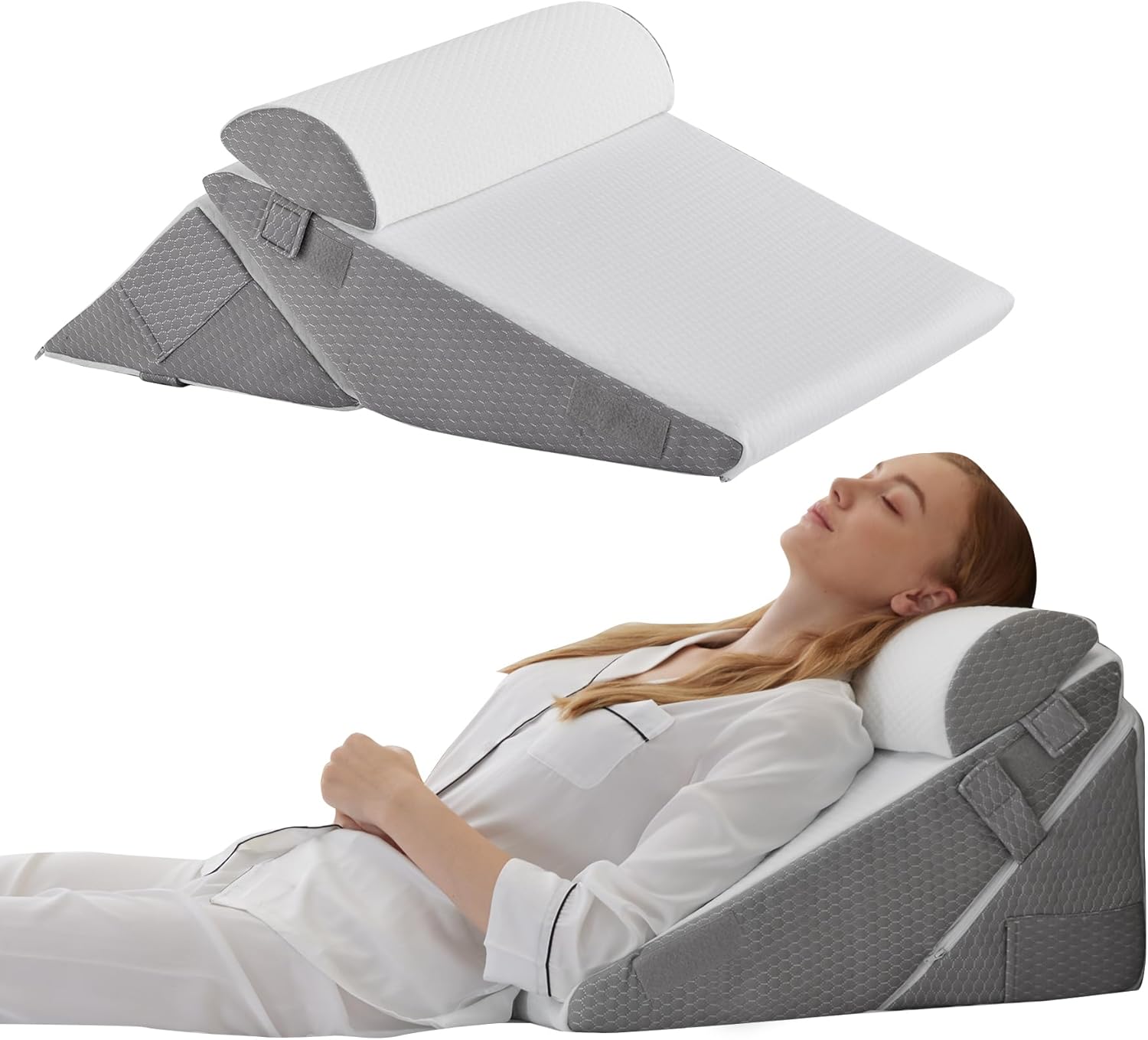
Bedluxe Wedge Pillow Headboard
A broad incline wedge for back sleepers who want more surface area under the torso instead of a narrow sleep-only ramp.
Best for: Back sleepers who feel steadier on a larger wedge and have enough bed space for a headboard-style footprint.
Why it fits this page: This route is about realistic back-sleep elevation, and the Bedluxe shape gives the sleeper a wider landing zone so the setup feels less like balancing on a small triangle.
Tradeoff: Skip it if a large wedge crowds the bed or if you need a compact fixed-angle piece that disappears under normal bedding.
Check current pricePick 2
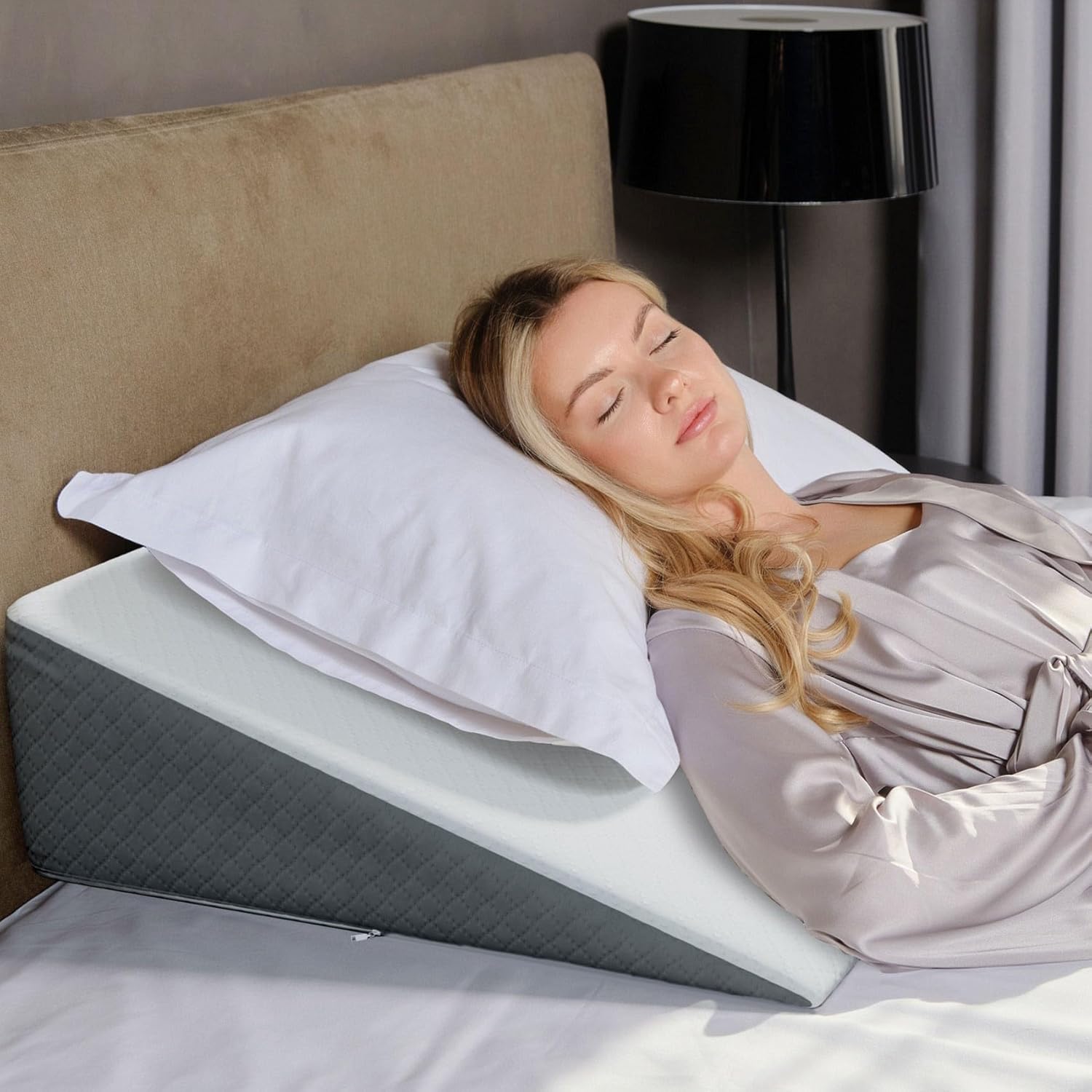
Kolbs Bed Wedge Pillow
A dedicated fixed-angle wedge for back sleepers who want a simpler, firmer incline surface.
Best for: Buyers who prefer a defined wedge shape over a larger backrest-style pillow and want the setup to feel more sleep-focused.
Why it fits this page: It fits this back-sleeper page because the direct incline can keep the torso raised without requiring a pile of loose pillows or a bulky headboard format.
Tradeoff: Avoid it if you need softer lounging space or frequent angle changes, because the value is a set wedge geometry.
Check current priceHow We Chose
We evaluated back-sleeper reflux wedges by torso support and sleepability. The important checks were slope length, hip sliding, neck angle, head-pillow compatibility, and whether the wedge supports the upper body without becoming a medical promise.
Back-sleeper reflux pillow buyer checks
Choose this category when the buyer sleeps mostly on the back and needs a stable upper-body incline rather than a small head pillow change. The useful test is whether the wedge lifts the torso as a unit, keeps the neck from folding forward, and stays put after the sleeper settles in.
Avoid this lane if you primarily side sleep, need a compact pillow swap, or slide down any incline quickly. Also avoid treating a reflux wedge as a treatment by itself; it can support positioning, but persistent or concerning reflux symptoms belong in a broader care conversation.
The failure mode is buying for height alone. A tall wedge can still be wrong if it is too steep, too narrow, too short under the torso, or too bulky to use every night. Test angle, shoulder comfort, and bed-space tolerance before assuming the biggest wedge is the best fit.
If angle is the uncertain part, start with the wedge-angle setup guide.
If you are not strictly a back sleeper, compare the general reflux wedge buying guide.
If you are deciding between a dedicated incline and loose pillow stacks, review wedge pillow versus stacking pillows for reflux before buying for height alone.
FAQ
- Who is a back-sleeper reflux wedge best for?
- It is best for back sleepers who can tolerate a gradual upper-body incline and want a more stable setup than stacked pillows. The goal is positioning comfort, not reflux treatment.
- What makes a wedge wrong for back sleepers?
- A wedge is wrong when it pushes the chin down, makes the hips slide, strains the low back, or causes repeated waking. If symptoms are persistent or concerning, the decision should move beyond pillow shopping.
- What should back sleepers check before buying?
- Check wedge length, torso support, head-pillow placement, sliding risk, and whether the slope feels sleepable for more than a short trial. Height alone is not enough information.
Final Takeaway
For back sleepers, the strongest reflux-pillow candidate is the setup that lifts the torso steadily without folding the neck or causing sliding. Avoid buying for height alone: a wedge that is too steep, too short, or too bulky can fail even if it looks more supportive, and it should not be treated as a reflux treatment by itself.
Compare wedge pillow versus stacking pillows for reflux if you are choosing between a dedicated incline and an improvised pillow stack.