
Quick Answer
For shoulder impingement discomfort, the best sleep setup is usually the one that keeps pressure off the painful shoulder and supports the arm so it does not pull across the body. Avoid any pillow or support system that forces the shoulder upward, traps the arm, or encourages you to ignore worsening pain.
What Matters Most
- best fit: side sleepers trying to unload the painful shoulder or back sleepers who need arm support
- avoid if: pain is sharp, worsening, numb, or present outside sleep positions
- better alternative: a simple arm-prop setup before a large support system when you only need mild positioning help
- common mistake: buying a bulky support product before checking where the arm and shoulder actually land
- setup note: test shoulder pressure, arm height, and whether you can turn without collapsing the support
Recommended Products
Start with the option that best matches your sleep position, contour preference, and tolerance for a fixed pillow shape.
Pick 1
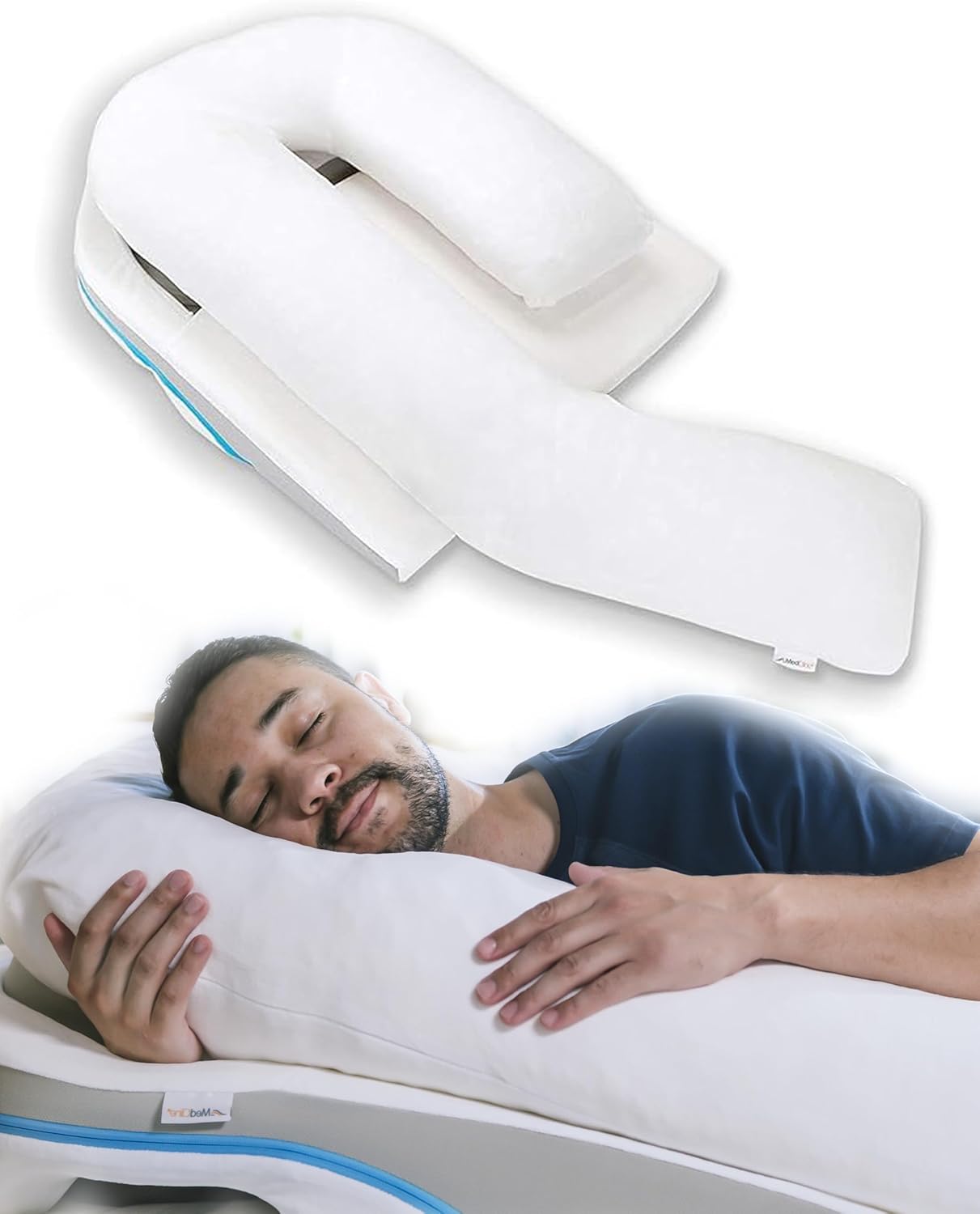
MedCline Shoulder Relief System
A direct shoulder-positioning system for readers who need more than a standard pillow swap.
Best for: Sleepers willing to use a larger setup to change shoulder loading and arm position during side sleep.
Why it fits this page: This route is about sleep position first, and MedCline belongs because it changes the shoulder setup itself rather than only adjusting head pillow height.
Tradeoff: Avoid it if you want a small, low-commitment pillow change, because the system is bulkier and more involved.
Check current pricePick 2
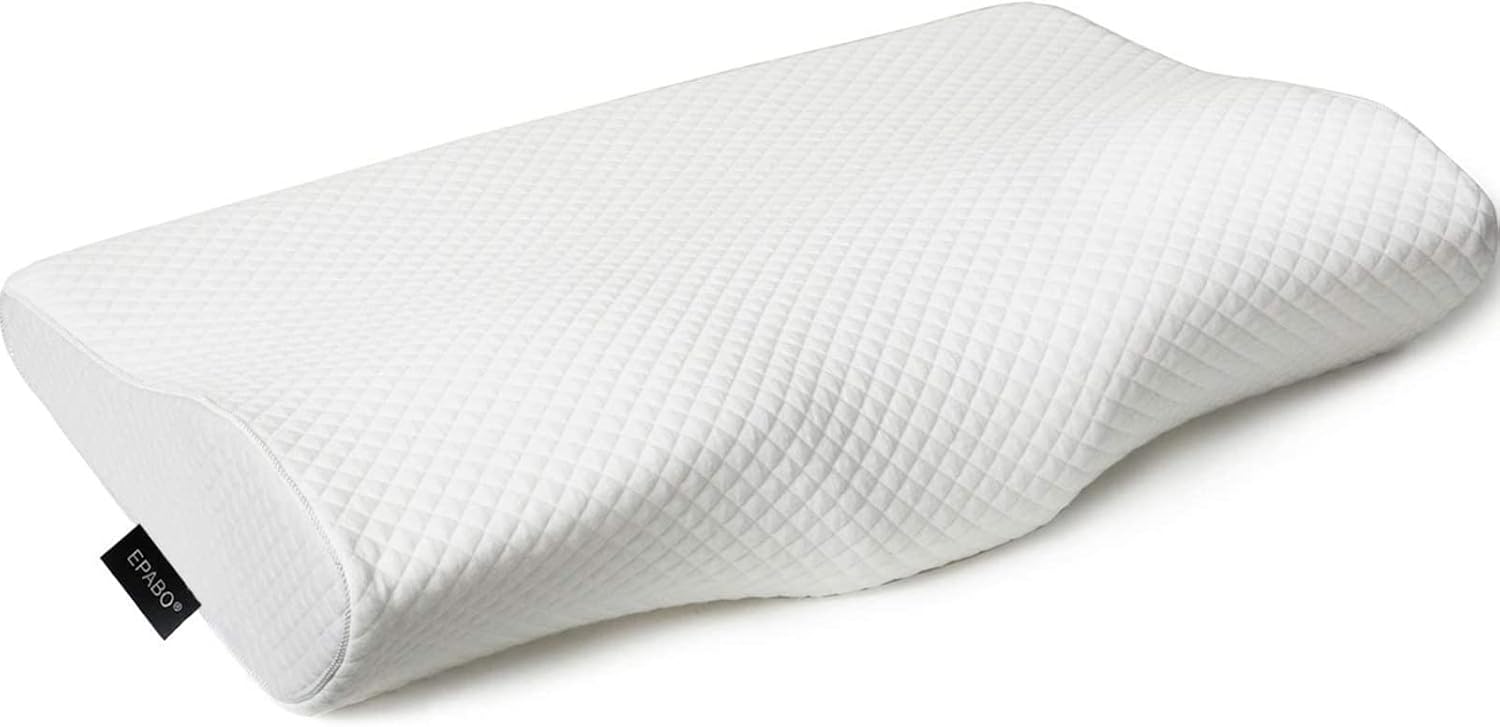
EPABO Contour Memory Foam Pillow
An adjacent contour-pillow aid for readers whose shoulder setup also depends on head and neck position.
Best for: Sleepers who already have shoulder positioning mostly handled and only need a more shaped head pillow to complete the setup.
Why it fits this page: It fits this route as a secondary support piece: the contour can organize head position, but it does not replace a shoulder-specific system.
Tradeoff: Skip it if the shoulder needs direct unloading or arm-space management, because a neck contour pillow is only an indirect part of that setup.
Check current priceHow We Chose
We separated shoulder-positioning products from ordinary neck pillows. A useful pick had to explain how it changes shoulder loading, arm placement, or side-sleep stability without promising to treat impingement. We favored setups that reduce direct pressure and make the supported position repeatable, and we treated any product as a poor fit if it encourages forcing a painful position instead of stopping and reassessing.
Shoulder-position setup checks before changing products
This page is most useful when the problem is the sleep setup, not a product label. Start by checking where the shoulder is loaded: direct pressure from side sleeping, the upper arm pulling forward, the pillow leaving the neck unsupported, or a wedge/system that changes the whole torso angle.
The failure mode is propping the head while leaving the shoulder joint twisted or compressed. Stop and reassess if a position increases sharp pain, numbness, tingling, or morning symptoms that feel worse than the starting point. This guidance can help organize sleep-position experiments, but it is not a treatment plan or a substitute for medical advice.
Use the simplest setup that reduces shoulder load without making the neck, back, or opposite shoulder work harder. If a basic pillow stack collapses or shifts, a dedicated shoulder-positioning system may be more realistic than adding more loose pillows.
For a more specific arm-position workflow, use the arm-propping setup guide.
If the shoulder setup is also changing neck angle, compare side-sleeper pillow fit checks.
FAQ
- What sleep position is usually easiest on an irritated shoulder?
- The easiest position is usually the one that keeps direct pressure off the irritated shoulder and prevents the upper arm from being pinned across the body. For many sleepers that means back sleeping or side sleeping on the other side with careful arm support.
- When should a pillow setup be avoided?
- Avoid forcing any setup that increases sharp pain, numbness, tingling, or shoulder pressure. A pillow arrangement is only a comfort aid, so worsening symptoms should be handled as a clinical issue rather than a buying problem.
- What should you check before buying shoulder support?
- Check where the sore shoulder rests, whether the arm needs space or lift, and whether the support will stay in place after you turn. Buying a large system before testing basic arm and body positioning can lead to an expensive mismatch.