
Quick Answer
Choose a wedge for side-sleeper snoring only if you need upper-body elevation and can stay on the incline without shoulder pressure or neck bend. Avoid this category when snoring includes gasping, breathing pauses, severe daytime sleepiness, or when a standard pillow-height or CPAP-clearance problem is the more obvious issue.
Browse the Parent Hub
See anti-snore pillow roundups, wedge comparisons, and practical troubleshooting pages for snoring-related searches.
Explore the full Snoring sleep guide hubWhat Matters Most
- best fit: side sleepers who need gentle torso elevation and enough wedge width to keep the shoulder on the slope
- avoid if: the incline crowds the shoulder, bends the neck, causes sliding, or snoring has concerning breathing signs
- better alternative: anti-snore pillow, CPAP pillow, mouthpiece pathway, or clinician guidance depending on the pattern
- common mistake: choosing a narrow or steep wedge that works on the back but fails on the side
- setup note: test shoulder room, pillow height on top of the wedge, sliding, and whether the lower arm has a comfortable path
Recommended Products
Start with the option that best matches your sleep position, contour preference, and tolerance for a fixed pillow shape.
Pick 1
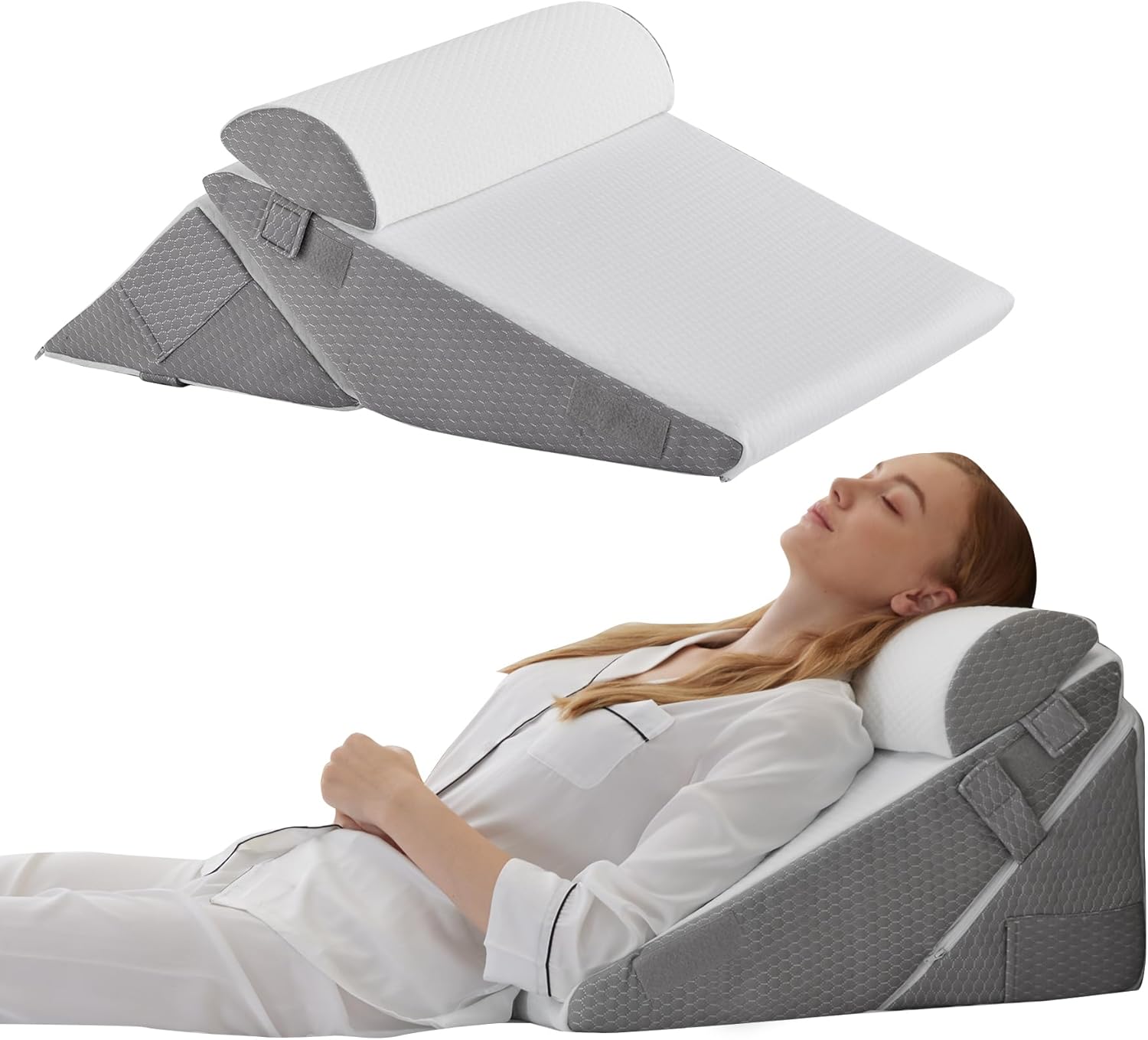
Bedluxe Wedge Pillow Headboard
A wide wedge-elevation option for side sleepers who want more room to stay on the angled surface.
Best for: Side sleepers who shift at night and need a larger wedge area under the torso rather than a narrow ramp.
Why it fits this page: This page is about wedge use while side sleeping, so the Bedluxe footprint matters because it gives the body more surface to remain aligned on the incline.
Tradeoff: Skip it if the real problem is mask clearance or head-pillow shape, because this is a torso-angle choice with a larger bed footprint.
Check current pricePick 2
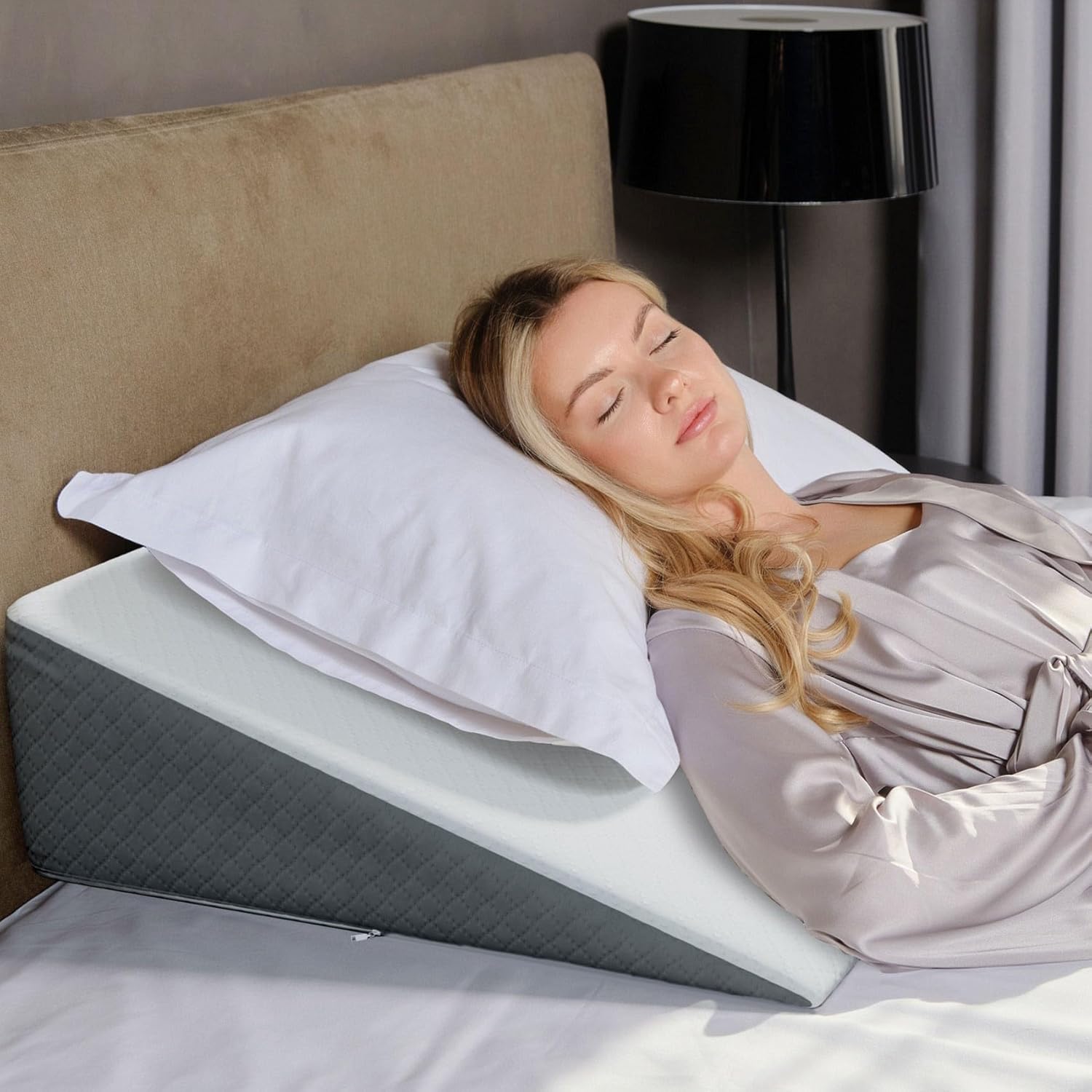
Kolbs Bed Wedge Pillow
A firmer wedge choice for side sleepers who want a defined incline and a less bulky profile.
Best for: Buyers who want side-sleep elevation but prefer a more compact wedge than a headboard-style pillow.
Why it fits this page: It fits this side-sleeper route as the more direct wedge option: the firmer ramp creates a clear angle without extra backrest bulk.
Tradeoff: Avoid it if you roll away from narrow or firm wedge surfaces, because side sleeping can expose that rigidity faster than back sleeping.
Check current priceHow We Chose
We evaluated wedge picks for side-sleeper practicality first: shoulder room on the incline, sliding control, wedge width, neck position with a head pillow, and whether the product changes torso angle rather than making snoring promises. Products were weaker if the design looked plausible for back sleeping but awkward for side sleeping.
Side-sleeper wedge fit and snoring setup checks
A wedge pillow is harder for side sleepers than it looks in product photos. The incline has to support more than the head; it should let the shoulder settle, keep the torso from sliding, and avoid pushing the chin toward the chest.
If the wedge feels stable on your back but awkward on your side, the issue may be fit rather than height. A lower, wider, more gradual incline can sometimes feel more realistic than a steep wedge that lifts the head but leaves the shoulder fighting the surface.
For snoring searches, keep the goal modest. A wedge may support a more elevated sleep position for some people, but it should not be treated as a cure, a sleep-apnea solution, or a replacement for medical guidance when symptoms are persistent or concerning.
Before treating a wedge as the whole answer, review what pillows can and cannot do for snoring.
If the incline feels unrealistic for side sleeping, compare snoring pillow options if a wedge feels too steep.
FAQ
- Who is a wedge pillow for side-sleeper snoring best for?
- It is best for side sleepers who need gentle upper-body elevation and enough wedge width to keep the shoulder on the slope. It is a narrower use case than basic back-sleeper wedge shopping.
- Who should avoid a wedge for snoring?
- Avoid this lane if the wedge crowds the lower shoulder, bends the neck, causes sliding, or if snoring includes gasping, breathing pauses, or severe daytime sleepiness. Those signs need more than a pillow decision.
- What is the biggest side-sleeper wedge mistake?
- The biggest mistake is buying a steep or narrow wedge that looks useful for back sleeping but fails on the side. Side sleepers need shoulder room, a usable head pillow angle, and a slope they can stay on.
Setup FAQ
- Can side sleepers use a wedge pillow for snoring?
- Some side sleepers can use a wedge pillow, but the fit has to work for the whole upper body. Look for enough shoulder room, a gradual incline, and a surface that does not make you slide or tuck your chin. If snoring is loud, frequent, or paired with gasping, pauses, morning headaches, or strong daytime sleepiness, treat that as a reason to seek medical guidance rather than relying on a pillow change.
- Is a bed wedge for snoring different from a regular wedge pillow?
- In most shopping searches, people use those phrases to mean a similar upper-body incline. The practical difference is whether the wedge is wide and stable enough for your sleep position. For side sleepers, stability and shoulder comfort usually matter more than the label in the product title.
- What makes a wedge pillow work better for side sleeping?
- A side-sleeper wedge usually needs a gradual slope, enough width to keep the torso supported, and enough shoulder space to avoid pressure. If you slide down the incline or wake with your neck bent forward, the wedge may be too steep or too narrow for your position.
More Snoring Guidance
For the full set of related product picks, comparisons, and setup guides, return to the main topic hub.
Browse all Snoring sleep guides